



The world contains over 60,000 tree species, but 30% of them are close to facing extinction. Habitat destruction, caused by human interference in the form of deforestation, intentional burning, and clearing land for agriculture, continues to be the primary cause of tree extinction.
Despite this, botanists, conservationists, and other stakeholders have rediscovered some trees said to be extinct and are taking great measures to preserve these species.
In this blog, we will shed light on tree species that have gone extinct, trees that have been rediscovered, and the restoration efforts being implemented to reintroduce tree species into the wild.
General Knowledge about Extinct Trees
How do scientists determine that a tree is extinct?
According to the IUCN, extinction is determined when the last species has passed away with “no reasonable doubt” However, due to the many forms of recordkeeping and circumstances regarding extinction, the definition varies within science. For this blog, we will specifically focus on two types: extinct trees in the wild and extinct trees with non-herbarium records.
- Extinct trees in the wild are no longer living in their natural habitat and are currently in captivity, often in arboretums or botanical gardens. Trees in these settings are typically clones or offspring produced from remaining seeds or other tree parts that were collected from the original tree.
- Extinct trees with non-herbarium records mean that the tree and all of its specimens no longer exist. The only indication we have of the tree is through photographs and other visual media.
How can trees be removed from the extinction list?
For a tree to be removed from extinction, it needs to successfully be reintroduced into the wild, survive environmental threats, and reproduce on its own. This requires a great deal of restoration efforts.
What are endemic species and how do they pertain to trees?
Endemic species are flora or fauna that are located in one isolated and restricted geographic area. These species are typically found on islands with biodiversity hot spots. Many of the trees in this blog are considered endemic species and had low abundance all along, decreasing the species’ chance to reproduce and survive on its own.
What are Examples of Permanently Extinct Trees?
Two examples of permanently extinct trees are the St. Helena Olive Tree and the Cooke’s Koki’o. Both species became extinct because of various human population pressures – cleared to make space for livestock, increased competition from invasive species, and a decrease in pollinators.
St. Helena Olive Tree – Status: Extinct Tree with Non-Herbarium Record
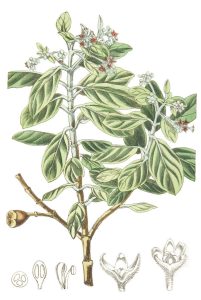 Known for its pink flowers that bloom in the summer, the St. Helena Olive Tree was an endemic species only found on St. Helena’s island in the South Atlantic. The island was biodiverse and contained over 50 flowering species. The first people to occupy and inhabit St. Helena were the Europeans in the 1500s. This included the Portuguese, Dutch, and British who commonly used the island as a trading port. As more people arrived to the island in the 1800s, the tree became increasingly rare due to the clearing of land for livestock and the rise in invasive species. Unfortunately, no conservation efforts were taken to preserve the tree and it became officially extinct in 1994. The St. Helena Tree was raised in captivity, but the last captive tree said to be alive was in 2003. The cause of death was from a fungal disease.
Cooke’s Koki’o – Status: Extinct Tree in the Wild
The Cooke’s Koki’o, also called the Molokai Red Cotton for its bright red and orange flower, was first put into record in 1860 on Moloka’i, a western island of Hawaii. One of the last species was spotted in 1915 in critical condition due to the loss of habitat, a low number of pollinators, and overgrazing, especially from sheep. Luckily, seeds from the Cooke’s Koki’o were collected before the tree was removed in 1918. In 1933, the collected seeds led to one seedling being planted at a private residence in Kauluwai. Unfortunately, that same tree died in the 1950s and the tree species was thought to be extinct. In 1970, the final Cooke’s Koki’o was found on the same property, but in 1978, it was destroyed in a fire.
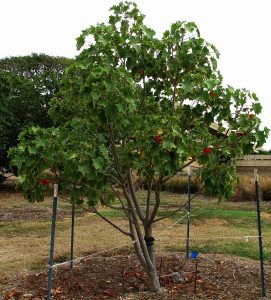
Scientists thankfully grafted a branch from the last tree and brought it to Waimea Arboretum for reproduction. Currently, the Arboretum has a total of 23 grafted plants. It is hard to say whether this tree still exists in the wild as the majority of its native habitat has been destroyed.
Have Any Trees Come Back From Extinction?
Yes! Several tree species have been rediscovered, like the Haha or Super Cyanea of Hawaii. Other tree species may come back from extinction as scientists hope to reintroduce them with preserved seeds, like the Toromiro on Easter Island, or finding a single living specimen, like the Lateleaf Oak which was found in Big Bend National Park, Texas.
Haha or Super Cyanea
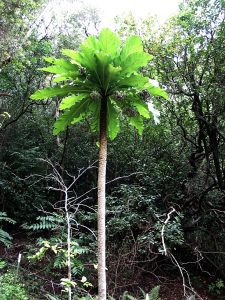 The Haha, or Super Cyanea, which is a single-stemmed palm-like tree, is endemic to the lowland forests of the Waianae and Ko’oalu Mountains on the Hawaiian island of Oahu. The tree’s exact date of extinction is unknown but is said to be between 1932 and 2002. The combination of habitat destruction, invasive species competition, and predator consumption by slugs and feral pigs were the causes of the Haha’s extinction.
Super Cyanea: Extinct Trees and Conservation
However, starting in 1998, the U.S. Army Natural Resource Conservation program made a conscientious effort to return subspecies of the Super Cyanea back into the Waianae mountains by planting 1,950 trees in over 20 sites. Several additional protocols were implemented to maintain the plants’ vitality including propagule management and threat control. After five years, the subspecies had grown past its historical range proving that reintroduction was a success. While Super Cyanea still faces many challenges including slow maturity, conservation efforts will continue to preserve this tree subspecies.
Toromiro
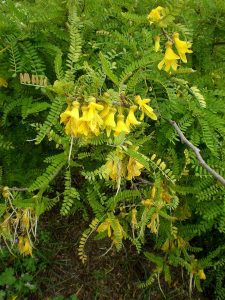
The Toromiro is endemic to Rapa Nui, or Easter Island, typically grows up to 10 meters tall, and produces pea-like yellow flowers. The wood of the toromiro was first used to carve moai faces and create sacred objects. It was then heavily used for firewood, construction, and for feeding cattle. The tree was said to be extinct in the 1960s due to rapidly changing environmental conditions and cutting the trees for the aforementioned uses. After bringing seeds from the original tree to the Viña del Mar National Botanical Garden in Chile, 98 trees grew and were planted in the wild. Unfortunately, they all passed away in the 1980s.
Toromiro: Extinct Trees and Conservation
Despite the tree still being extinct today, major strides are being taken to reintroduce the species once more. Scientists discovered that the Toromiro is related to pea plants which form a symbiotic relationship with nitrogen-fixing bacteria that stick onto root nodules. The Toromiro specifically had microbes called rhizobia attached to the plant and the lack of this microbe in the soil is a plausible reason why the initial reintroduction efforts failed.
Scientists have since found and injected a similar microbe into the plants that are currently being grown at the Rapa Nui nursery. The scientists continue to tend to the current 33 plants that are growing at different stages and are preparing to search for ideal spots to plant the Toromiro saplings in the future.
Lateleaf Oak – Data Deficient
The Lateleaf Oak, which is known for its 6-8 lobes, smooth texture, and oval shape, was said to be extinct since 2011. While the causes of extinction are not confirmed, it is assumed that its demise was similar to other oak species including climate change effects and fire. However, in 2022, a team of botanical researchers from the Morton Arboretum, U.S. Botanic Garden, and other institutions rediscovered the species standing in the Chisos Mountains located at Big Bend National Park. The single specimen was not in the best shape as it had a worsening fungal infection and destruction from a fire or drought.
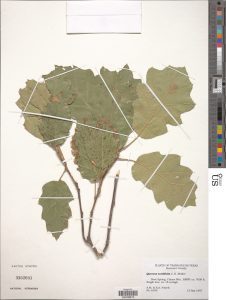
To protect the tree from continual threats, the National Park Service has begun working with the researchers. A DNA test will be conducted to confirm if the tree is truly a Lateleaf Oak. The scientists are also looking into grafting since they are concerned that the lone tree is not producing its own acorns. For now, the tree species is labeled as data deficient by the IUCN since little is known about its distribution and population size. Overall, finding a live Lateleaf Oak was fortuitous, as oak tree acorns do not stay well preserved in seed banks – its only chance of survival is in the wild.
Population Pressures and Tree Extinction
These five examples show us that population pressures and tree extinctions are clearly intertwined. Throughout history, population growth and human involvement, including clear-cutting to make space for agriculture, the spread of invasives, and overharvesting for human uses, continue to result in the endangerment and extinction of trees. Despite this negative trend, scientists offer us hope as they make great efforts to restore and revive tree species on the brink of extinction.
Image credits: St. Helena olive tree (John Charles Meliss, Public domain, via Wikimedia Commons); Cooke’s Koki’o (David Eickhoff from Pearl City, Hawaii, USA, CC BY 2.0, via Wikimedia Commons); Super Cyanea subspecies (David Eickhoff from Pearl City, Hawaii, USA, CC BY 2.0, via Wikimedia Commons); Toromiro (Consultaplantas, CC BY-SA 4.0, via Wikimedia Commons); Lateleaf Oak pressed specimen (Quercus tardifolia C.H. Müll. by A. M. Powell and S. Powell is Public domain)
Frequently Asked Questions About Extinct Trees
How can we identify and protect endangered or extinct trees?
Scientists identify endangered trees through field surveys, historical records, herbarium collections, genetic testing, and assessments of their population size and geographic distribution. Protection can include preserving natural habitats, controlling invasive species, collecting seeds, propagating trees in botanical gardens, and establishing legally protected areas. Trees that are extinct in the wild may also be cultivated in arboretums and nurseries for eventual reintroduction.
What are the main reasons for the extinction of certain tree species?
The main causes include habitat destruction, deforestation, land clearing for agriculture, overharvesting, invasive species, pests, disease, and climate change. Tree species with small populations or limited geographic ranges are especially vulnerable. Extinction is rarely caused by only one factor; several environmental and human pressures typically combine to prevent trees from surviving and reproducing.
Are there any efforts to revive extinct tree species through scientific research?
Yes, scientists are working to restore species that are extinct in the wild or believed to be extinct. Seeds, cuttings, grafting, tissue propagation, and cultivated specimens may be used to produce new trees. Researchers also study soil conditions, pollinators, genetic diversity, and beneficial microorganisms to improve reintroduction efforts. However, a truly extinct species cannot be restored unless viable biological material or living specimens remain.
What role do extinct trees play in their ecosystems and why is their conservation important?
Once a tree species becomes extinct, it can no longer provide food, shelter, shade, soil protection, or other services within its ecosystem. Its disappearance may also affect insects, birds, fungi, and other organisms that depended on it. Conserving endangered and extinct-in-the-wild trees helps protect biodiversity, preserve genetic resources, and maintain healthier, more resilient ecosystems. Studying extinct trees can also help scientists prevent similar losses in the future.