



Every summer Population Education is fortunate to host interns from around the U.S. These students bring their talents and passions to the PopEd program by completing a wide variety of projects. The following blog was written by one of PopEd’s 2026 summer interns.
We can all agree that school is where kids go not only to receive formal education, but to take away important life skills: how to socialize with others, control their behavior, and emotionally regulate. One of the great things about school is that learning does not have to stop outside of normal instructional hours. Afterschool Programs (ASPs) are one of the many ways students can access a space, and support, for continued learning. In fact, regular attendance at afterschool programs can positively influence students’ social, academic, and cognitive development.
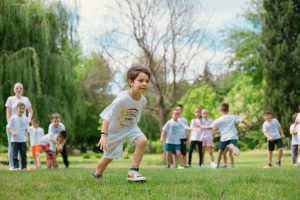
Some might think ASPs are just babysitting or a place for students who have empty hours to fill. But ASPs are so much more. By providing safe supervision, structured activities, and positive adult relationships/investment, kids are more protected during high-risk unsupervised hours. Participation in these programs in turn leads to increased test scores and improved executive functioning skills, social competence, and controlled behavior.
This blog will highlight the benefits of afterschool enrichment activities for elementary school-aged children in regard to social relationships, academic achievement, and cognitive development.
ASPs’ Influence on Social Relationships
ASPs provide an opportunity for students to hang out with their peers in a less formal setting than a standard school day. With a more intimate group of children, they can engage in collaborative activities that focus on working together for a common goal/project. This helps foster community and connection between students
ASPs foster a space for children to grow in emotional learning, self-perception, cooperation, and perseverance. The more kids interact and learn from one another in a productive setting, the more they understand social cues, how to share, and how to emotionally regulate.
Furthermore, if students are actively engaged in ASPs, it will help increase social competence and motivation for their peers as well. When kids become passionate about a project, that energy builds and synergizes for everyone else. By simply being around kids their own age, in a controlled but informal environment, they can engage in more opportunities for collaboration and play. What a fun way of learning!
ASPs’ Influence on Academic Achievement
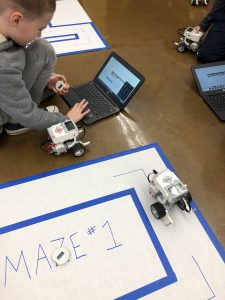 While a typical elementary curriculum teaches the hard facts in sciences, math, and reading, ASPs are places for kids to apply these skills/concepts to the real world. For example, kids learn about the water cycle in school, but in an ASP they might have a chance to build a rain catcher, giving them a tangible, hands-on connection to what they learned.
Data shows that test scores of students engaged in ASPs are 12% higher than students who do not attend. This suggests that ASPs benefit kids’ formal education and makes their learning more well-rounded. Additionally, high levels of engagement in ASPs were linked to motivational characteristics. ASPs incentivize students to come to school so they can go to their afterschool activity once the school day is over. By extension, the more time kids are in the classroom learning, the better their test scores.
Qualitative data supports these findings as well. Teachers report that regular engagement in academic and arts afterschool program activities was significantly related to changes in academic skills they saw over the course of the school year.
ASPs’ Influence on Cognitive Development
Focused time to practice executive functioning (EF) skills don’t always make the cut during the standard school day and may not get enough attention without caregiver or adult intervention. These mental skills help provide top-down control enabling goal setting, planning, focusing attention, and task completion.
Programs that were most successful in improving executive functioning were those that challenged all three of EF’s core areas continually and intentionally: working memory, cognitive flexibility, and inhibitory control. These can be put into practice at ASPs through fun games for kids such as memory cards and playing pretend, letting kids lead an activity to learn time management, or taking responsibilities to clean up messes after programs.
Ultimately, EF teaches young children how to regulate behaviors and manage daily life through the physical and mental skills learned from problem solving and collaborating with others. These can be seamlessly worked into afterschool clubs which offer a time for kids to be intellectually challenged and think outside the box.
PopEd is a Helpful Resource for Afterschool Programming
Many of the resources and activities from Population Education are a great fit for Afterschool Programs because they
- implement context specific activities and give leaders a wide variety of options to fit different interests/backgrounds.
- involve hands-on and cooperative learning to cultivate a strong learning environment and positive relationships with peers and adults.
- require minimal or inexpensive items that can often be packed up and taken on the go.
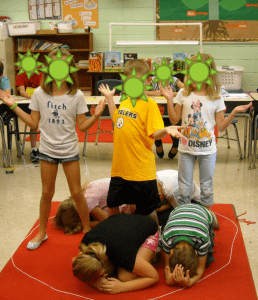
Elementary students demonstrate PopEd’s ‘Crowding Can Be Seedy’ lesson.
FAQ: Benefits of Afterschool Programs
What are the main benefits of afterschool programs?
After school programs can support children’s academic, social, emotional, and cognitive development. They give students opportunities to reinforce classroom learning, build friendships, practice problem-solving and teamwork, develop emotional regulation, and learn practical life skills in a safe, structured environment.
Are afterschool programs worth the investment for kids?
For many families, quality after school programs can be a valuable investment in a child’s development. Beyond providing supervision, structured programs can support academic achievement, social confidence, executive functioning, independence, and positive relationships with peers and adults.
How do afterschool programs support working parents?
After school programs provide a safe and structured environment for children between the end of the school day and the end of the typical workday. For working parents, this can provide reliable supervision while giving children meaningful opportunities to learn, socialize, play, and develop new skills.
What life skills do children gain from afterschool programs?
Children can develop communication, teamwork, problem-solving, time management, responsibility, perseverance, and emotional regulation through after school activities. Collaborative projects and hands-on activities are especially useful because children get to practice these skills in real situations.
What are the emotional and behavioral benefits of afterschool programs?
Structured after school programs can give children more opportunities to practice managing emotions, cooperating with others, following expectations, resolving problems, and controlling impulses. Positive relationships with peers and adult leaders can also help children develop confidence, persistence, and a stronger sense of belonging.
Image credits: Kids outside (Photo by Aleksandar Andreev on Unsplash); Robotics club (Weaver Elementary Robotics Club benefits from relationship with University of Missouri Extension. by MUExtension417 is licensed under CC BY-NC 2.0.)