



Over the past two centuries, economic shifts, technological innovation, social movements, and even public health have reshaped not only how Americans work, but who gets to work and under what conditions. The story of work in the United States is one of constant reinvention.
In this blog, we’ll travel through time to see the transformation of labor in the United States: from agricultural beginnings, to manufacturing with the Industrial Revolution, to the emergence of the service and technology industries, and up to the gig economy of today.
1700s: Agriculture
In the early years of the U.S., work was deeply rooted in the household. Most Americans lived on farms, and nearly every family member contributed. Even outside agriculture, labor often revolved around family-run businesses like shops, taverns, and craft trades. Skills were passed down through generations, and the home and workplace were usually one and the same. For poorer individuals, especially women and immigrants, options were limited to domestic service or indentured labor.
1800s: Manufacturing
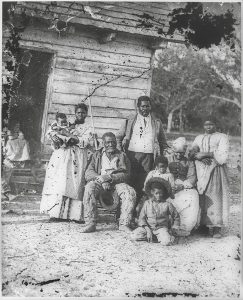 The rise of textile mills in the 1790s and early 1800s marked the beginning of the Industrial Revolution in the United States. Cotton, the most popular commodity in the U.S. at the time, bridged the gap between agriculture and industrialization. Cotton was grown on southern farms and then sent to northern textile mills for cloth production. The labor of enslaved people on the plantations, and the system of slavery, fueled and built the foundation of the U.S. economy.
The shift to manufacturing accelerated when industrial growth exploded after the Civil War. Work outside of the home became a draw, especially for men, as production shifted from homes to factories. Cities expanded rapidly as immigrants and rural workers sought new employment opportunities. However, working conditions were often dangerous and exploitative. Child labor became widespread in factories, and many workers endured little pay and long hours with few protections.
In response, labor unions began forming in the late 19th century, pushing for better wages, safer workplaces, and shorter workdays. These movements gained momentum, culminating in large-scale strikes and the eventual establishment of Labor Day in 1894.
1900s: Service
The 20th century brought sweeping changes once again. Worker protections improved significantly during this period, especially under New Deal legislation in the 1930s, which introduced minimum wage laws, limited working hours, and reduced child labor. Programs like Social Security also provided financial stability for retirees and vulnerable populations.
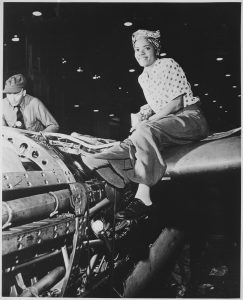
World Wars I and II reshaped the workforce as women entered the labor force in unprecedented numbers. With millions of men serving in the military, women took on roles in factories, farms and offices – places they had not previously been welcomed. Although many women left these jobs after the wars, their contributions permanently expanded perceptions of women’s capabilities in the workplace.
As the U.S. economy diversified, jobs gradually shifted from agriculture and manufacturing to service, professional, and technical fields. And the postwar era saw the rise of a strong middle class, fueled by economic growth and increased access to benefits like employer-sponsored health insurance.
However, this prosperity was not equally shared. Women and people of color faced systemic discrimination that included limited job opportunities and unequal pay. The Civil Rights Movement of the 1960s helped address some of these inequalities, leading to landmark legislation that banned workplace discrimination and promoted equal pay.
2000s: Technology
In recent decades, the nature of work has shifted again. Technology and globalization have reduced manufacturing jobs while increasing demand for education and specialized skills. Today, healthcare, technology, and personal service industries dominate the labor market. At the same time, traditional full-time employment is no longer the only model. Freelancing, self-employment, and gig work have grown rapidly.

These changes have introduced new challenges. The rise of gig work and contract jobs has left some without income stability or affordable health insurance – a benefit many American workers still rely on from employers. Additionally, while progress has been made towards income equality, wage gaps persist, especially along gender and racial lines.
Following the COVID-19 pandemic, even those with more traditional jobs saw a dramatic shift in where they did their work. Stay-at-home orders at the height of the pandemic had office employees working from home. Even years later, some positions have remained remote, and others have become hybrid with a mixture of some workdays at home and other days in the office.
The Future of Work in America
What will be the next big shift in U.S. labor trends? Artificial Intelligence (AI) is sure to have a sizable impact. What’s more difficult to pinpoint is exactly how and when, given how quickly the technology itself is changing. Early signs suggest that generative AI may replace positions involving routine, repetitive tasks, such as transferring data between systems. At the same time, it is likely to create or reshape jobs in which generative AI enhances quality and efficiency. In these positions, workers will need new training, both in uniquely human, non-automatable skills as routine tasks are handled by AI, and for new AI-related skills in order to fully utilize the AI tools available.
The evolution of work in America has always reflected broader social and economic trends, and that is especially true with artificial intelligence. From farms to factories to generative AI, each era has redefined what it means to earn a living. As the workforce continues to change, the ongoing challenge remains the same: ensuring that opportunity, fairness, and security keep pace with innovation.
History and Evolution of Work FAQ
How did the Industrial Revolution change the American workforce?
The Industrial Revolution moved work from homes and farms into factories and manufacturing centers. It created new employment opportunities, accelerated urbanization, and increased production. However, it also led to long working hours, unsafe conditions, reliance of fossil fuels, and widespread child labor, which ultimately contributed to the growth of labor unions and workplace reforms.
How did women’s participation in the workforce change during the 20th century?
Women entered the workforce in record numbers during World Wars I and II, filling jobs left vacant by military service members. Although many women left these positions after the wars, their contributions helped expand opportunities for future generations and contributed to changing perceptions about women’s roles in the workplace.
How did the Civil Rights Movement affect employment in the United States?
The Civil Rights Movement helped address workplace discrimination based on race, gender, and other protected characteristics. Landmark legislation tried to promote equal employment opportunities, prohibited discriminatory hiring practices, and strengthened workplace protections for historically marginalized groups.
How has technology transformed labor in the United States?
Technology has continually reshaped work, from mechanized factory production during the Industrial Revolution to computers, the internet, and automation. Technological advancements have increased productivity, created new industries, and changed the skills workers need to succeed.
How did the COVID-19 pandemic change the workplace?
The COVID-19 pandemic accelerated the adoption of remote work and hybrid work arrangements. Many organizations invested in digital collaboration tools, and flexible work options became more common across a variety of industries.
Image credits: Enslaved family on Smith’s Plantation, South Carolina 1862 (Timothy H. O’Sullivan, Public domain, via Wikimedia Commons); Female riveter at Lockheed Aircraft Corp, sometime 1940-1945 (National Archives at College Park, Public domain, via Wikimedia Commons); Remote work meeting (Photo by Kimberly Nguyen on Unsplash)