



For the next two months, PopEd will be using our blog and social media channels to support K-12 teachers with TESOL – Teaching English to Speakers of Other Languages.
TESOL refers to classroom strategies, like scaffolded instruction, visual supports, and multimodal delivery, to help English Language Learners/Multilingual Learners (ELLs/MLLs) build their language skills and achieve academic success.
The Link Between TESOL and Environmental Education
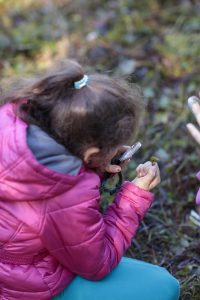 Like all students, multilingual learners learn best when classroom content is rooted in the real-world. This makes environmental and global education uniquely positioned to provide engaging learning experiences for English language learners. When studying topics like resource use, sustainability, community needs, or biodiversity, students have authentic opportunities to learn new vocabulary, practice reading compression, share opinions, and engage in meaningful discussion with peers. In fact, TESOL and sustainability ed go so hand-in-hand that the American TESOL Institute and the TESOL International Association offer a number of specialized trainings and curricula to support teachers in integrating ‘eco literacy’ into their TESOL instruction.
PopEd Resources for TESOL Instruction
With their hands-on focus and multimodal delivery, PopEd lessons are a natural fit for supporting language learners. And with a newly released library of TESOL lessons written specifically to meet the needs of MLLs, teaching PopEd concepts to students of all language levels is more effective than ever.
- PopEd’s TESOL Lessons: PopEd’s TESOL lessons are adapted versions of popular activities, like Who Polluted the River and In Search of Sustainable Life, that have greater emphasis on English-language speaking, writing, listening, and reading. The TESOL lessons also offer more instructional scaffolding, place extra emphasis on vocabulary acquisition, and use student materials that are more widely accessible to language learners.
- Free Interactive TESOL Webinar: Want to see PopEd’s new TESOL lessons in action? Join us Thursday, December 10th for a free online webinar, Interdisciplinary TESOL Lessons for People and the Planet. Teachers participate in a series of TESOL activities and learn what new supports are available for MLLs in PopEd materials. We hope that you’ll join us for a night of learning!
- TESOL Blogs: Don’t miss our TESOL focused blog series, which will cover a number of topics ranging from how to design your own TESOL lessons to explaining the different language levels.
- Curated TESOL Resources: We’ll also be sharing resources from places like World TESOL Academy and the American TESOL Institute, so that you’ve got lots of MLL-friendly materials at your fingertips.
Why the focus on TESOL? Let’s look at some numbers…
The number of TESOL students in the United States has grown steadily over the years and the teacher training required to accommodate this growth has not kept pace.

- According to Migration Policy Institute, there are over 5.3 million ELL students in the U.S., accounting for nearly 11% of the K-12 student population.
- More than two-thirds of U.S. teachers have at least one English learner in their classroom.
- Only 10% of teachers hold a certification in teaching ESL (English a Second Language) and only 48% have taken a single course focused on teaching English language learners.
This gap between the number of English Language Learners and trained TESOL educators corresponds with an achievement gap, with ELLs often scoring significantly lower on standardized tests than their peers.
Free TESOL This Fall
This fall we’ll help bridge this gap by sharing quality classroom resources to support day-to-day TESOL instruction. Follow along on Facebook, LinkedIn, and BlueSky to get up-to-date info and scaffolded lesson plans that will support language acquisition while engaging students in real-world, meaningful learning.
Image credits: Student outdoors with magnifying glass (Student with a Magnifying Glass by Shenandoah National Park is public domain); Students at desks (Photo by Quilia on Unsplash)