



The movement of people – whether across the globe, from one state to another, or from countryside to city – shapes communities, cultures, and the environment the world over. Human migration, defined as “the movement of people away from their usual place of residence to a new place of residence, either across an international border or within a state,” has been taking place since the dawn of time and is an integral part of our human history. Today, it remains one of the biggest influences on modern society, capturing headlines and impacting lives around the globe.
Resources for Teaching Migration

As a teacher, you’ve likely thought about how to cover the complex topic of migration with your students. Perhaps migration has touched students’ own lives or those in their community. Or maybe you’re just looking for a way to bring current events into your classroom in a meaningful way. Regardless, teaching about human migration will leave your students with a more solid understanding of how people impact the world we live in.
Over the coming weeks, we’ll explore migration from multiple perspectives and share resources and ideas for teaching this important topic in any grade. We’ll examine the push and pull factors that influence migration decisions, investigate how migration affects population change, explore trends in urbanization, look at the growing issue of climate migrants, and more.
Follow along on our social channels so you don’t miss any of the great resources we’ll share for teaching about migration:
Free Teacher Webinar: “Teaching Migration with Simulations, Stories, and Data”
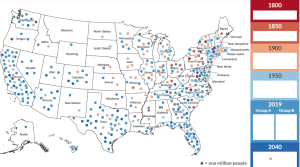
Join us for an interactive webinar designed to support grades 6-12 teachers in covering migration topics. We’ll explore a simulation that models push and pull factors, analyze news articles that highlight personal migration stories, and map historical population data to investigate changing population density through U.S. history. As always, teachers will take home a curricula full of classroom-ready lessons for teaching population topics at their target grade level. Register for the migration webinar here – we hope to see you there.
Migration Blog Series
Our blog will offer an in-depth look at some of the hottest button issues surrounding migration. After an explainer on the different types of migration, we’ll dig into rural to urban migration trends, migration impacts on population pyramids, and the rise of environmental migrants and climate refugees. Through these easy-to-read explainers, you’ll feel more prepared to bring these critical topics into your classroom.
Migration Lesson Plans and Teacher Resources
And speaking of classrooms, follow along on Facebook, Bluesky, and LinkedIn for lots of free migration teaching resources! PopEd lessons like People on the Move, make migration digestible and accessible to all learners. Student readings like The People Connection give deeper context to where and why people move from place to place.
Why Teach Migration?
Teaching migration topics gives students a boost both academically and social- emotionally, laying the foundation for developing global citizens.
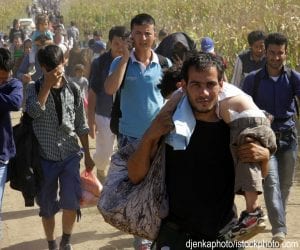
Students who understand the reasons behind why people move, develop empathy and compassion. They might find it easier to relate to students in their own community from different backgrounds and be willing to support vulnerable populations both near and far. Understanding migration dynamics also gives context to politicizing headlines that students have likely heard, helping to create a more culturally inclusive classroom.
Beyond the social-emotional benefits, migration offers a powerful avenue for teaching about many of today’s most challenging topics. Climate change, urbanization, global inequality and more can all be examined in the context of how they contribute to and are impacted by the movement of people. This opens the door for teaching core content in geography, environmental science, and economics.
Whether you teach young students or high schoolers, and whether you prefer to focus on local issues or global trends, the study of migration provides a framework for exploring the ever-changing world around us. PopEd is here to help you teach this important topic in the weeks ahead – let’s go!
Image credits: Suitcases (Nick Fewings on Unsplash); Refugees (ID 496858942 © djenkaphoto | iStockphoto.com)