


Every summer Population Education is fortunate to host interns from around the U.S. These students bring their talents and passions to the PopEd program by completing a wide variety of projects. The following reading list was compiled and written by PopEd’s 2026 summer interns.
We’re half way through summer – does it already feel like it’s going by way too fast? If yes, take a breath, have a seat, and enjoy a good long read.
We’ve put together a great collection of books that are important to us here at Population Education. These 11 books will draw you in, opening your mind to possibilities you may have never considered.
Whether you’re on the beach or enjoying some nice A/C, what better way to spend your time than reading a book from PopEd’s Summer 2026 book list!
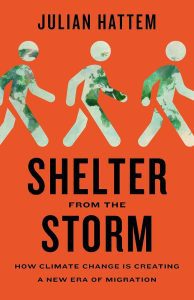
Shelter from the Storm: How Climate Change Is Creating a New Era of Migration by Julian Hattem (2026)
What does it mean to be a “climate migrant”? In his deeply reported debut Shelter from the Storm, journalist and Migration Policy Institute editor Julian Hattem travels from the South Pacific to the Indian subcontinent to the shores of the Mediterranean to put a human face on a phenomenon already reshaping global populations. He argues that mass displacement driven by climate isn’t coming, it’s here. And while the numbers are staggering, Hattem resists fearmongering, instead offering nuance: the bigger crisis, he writes, may not be that too many people are moving, but that the most vulnerable among them cannot afford to. A must-read for anyone thinking seriously about where people go when home becomes uninhabitable.
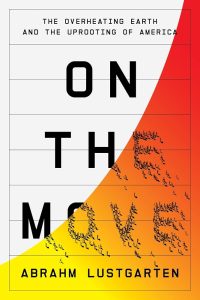
On the Move: The Overheating Earth and the Uprooting of America by Abrahm Lustgarten (2024)
This one hits close to home. ProPublica investigative journalist Abrahm Lustgarten makes the case that climate-driven migration isn’t just a story happening elsewhere, but right here in the United States. Wildfires in the West, flooding on the Gulf Coast, extreme heat in the South, and agriculture-crushing droughts are already pushing Americans out of the places they’ve lived for generations. Tens of millions more may follow. In On the Move, Lustgarten maps where people are likely to go, who gets left behind, and what it means for the future shape of American society. If you think you already know enough about climate change, this book will make you think again.
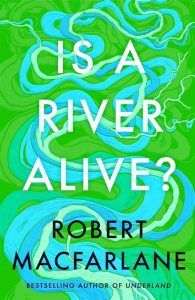
Is a River Alive? by Robert Macfarlane (2025)
What if the question isn’t how we protect rivers, but whether rivers deserve legal rights of their own? Is a River Alive? takes award-winning nature writer Robert Macfarlane to three river systems in Ecuador, India, and Canada to explore a radical but growing idea: that rivers are living beings, and the law should treat them as such. It’s a lyrical, thought-provoking journey through the rights of nature movement, Indigenous legal traditions, and the battle between ecosystems and extractive industries. A New York Times bestseller and a Kirkus Reviews Best Book of 2025, it’s the kind of book that genuinely changes how you see the world around you.
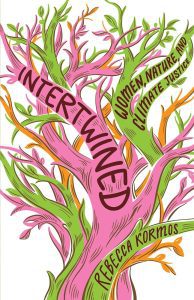
Intertwined: Women, Nature, and Climate Justice by Rebecca Kormos (2024)
Women bear a disproportionate burden when climate change hits; they are more likely to lose livelihoods when storms destroy fisheries, more likely to face food insecurity when drought decimates harvests, more likely to be displaced. Wildlife biologist Rebecca Kormos explores this inequity head-on and then flips the script: she shows that when women lead conservation efforts, outcomes improve for everyone. Intertwined weaves together personal stories from women on the front lines of environmental protection around the world, making a compelling case that gender equity and ecological health are inseparable.
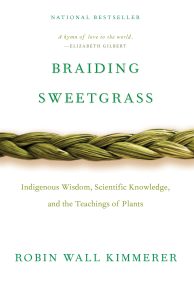 Braiding Sweetgrass: Indigenous Wisdom, Scientific Knowledge, and the Teachings of Plants by Robin Wall Kimmerer (2013, republished 2020)
Braiding Sweetgrass has been on our radar for a while and belongs on every environmental reading list. Robin Wall Kimmerer, a botanist and member of the Citizen Potawatomi Nation, asks what it would mean to treat the plant world not as a resource to be extracted, but as a community of teachers deserving of gratitude and reciprocity. Part science, part memoir, part love letter to the natural world, Braiding Sweetgrass has become a cornerstone text for anyone thinking about humans’ relationship to the Earth. If you haven’t read it yet, this is your summer.
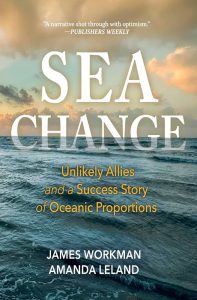 Sea Change: How Collaborative Ocean Fisheries Management Is Saving Our Seas by James Workman and Amanda Leland (2025)
Along the Gulf of Mexico, decades of overfishing had pushed key species to the edge of collapse. Then something unusual happened: fishers, scientists, environmentalists, and regulators decided to work together. Sea Change tells the story of how that unlikely coalition built a new model for managing fisheries – one that is now being applied elsewhere in the world. It’s a solutions-focused book about one of PopEd’s favorite topics (ocean ecosystems and the human communities that depend on them), and a refreshing reminder that collaborative problem-solving, even across deep divides, can lead to success.
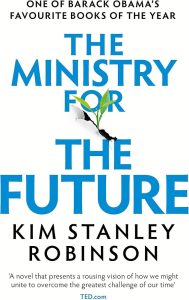
The Ministry for the Future by Kim Stanley Robinson (2020)
Fiction has a way of making the unimaginable feel real, and that’s exactly what Kim Stanley Robinson does in this landmark climate novel The Ministry for the Future. Set in the near future, the book opens with a catastrophic heat wave in India that kills millions, and follows a new UN agency created to advocate on behalf of future generations. Robinson blends policy, economics, and human drama to ask: what would it actually take to avert climate collapse? It’s been described as the most politically and scientifically realistic climate fiction ever written, and has become required reading in sustainability circles worldwide. If you’re new to cli-fi, fair warning – it will stay with you.
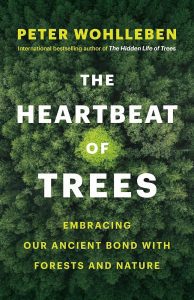 The Heartbeat of Trees: Embracing Our Ancient Bond with Forests and Nature by Peter Wohlleben (2021)
You may already know Peter Wohlleben from The Hidden Life of Trees. This follow-up, The Heartbeat of Trees, is just as absorbing. Wohlleben explores the science behind how humans are instinctively drawn to the natural world and what we lose when we lose access to it. Drawing on research in forest ecology, psychology, and evolutionary biology, he argues that our disconnection from nature isn’t just bad for the planet – it’s bad for us. It’s a warm, accessible, and deeply grounding read that is perfect for a summer that (hopefully) includes some time outdoors.
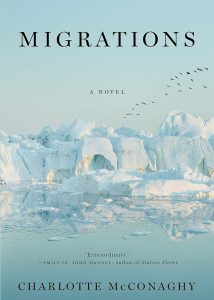 Migrations by Charlotte McConaghy (2020)
If you want your summer reading to gut-punch you (in the best way), here it is. In a near-future world where wildlife has nearly vanished, a woman named Franny Stone embarks on a desperate voyage across the Atlantic to follow the last Arctic terns on what may be their final migration. It’s a novel about grief, survival, and what it means to bear witness to loss — both ecological and personal. Lyrical, propulsive, and genuinely devastating, Migrations is the kind of climate fiction that doesn’t let you look away. A film adaptation is also in the works!
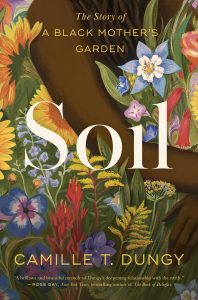 Soil: The Story of a Black Mother’s Garden by Camille T. Dungy (2023/2024)
Part memoir, part natural history, Soil follows poet and scholar Camille Dungy as she plants a native garden in her Colorado neighborhood. From her perspective of one of the only Black families on the block, she must reckon with questions of belonging, ecology, and what it means to put down roots. It’s a quiet, beautiful, and politically rich book about land, identity, and the small acts of stewardship that bind us to place. This book is for anyone who has ever thought about who gets to be in nature, and who gets to belong to it.
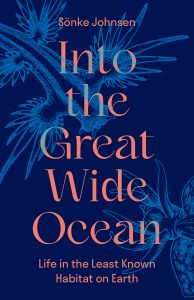 Into the Great Wide Ocean: Life in the Least Known Habitat on Earth by Sönke Johnsen (2024)
In his vivid exploration of the open sea’s water column, Sönke Johnsen details how marine life navigates a gauntlet of environmental hurdles, from the immense pressure that could flatten a truck to the constant struggle of finding food without becoming prey. The narrative addresses the complexities of movement, gravity, and reproduction in a near-lightless void while forming resilient communities. Alongside these biological marvels, Into the Great Wide Ocean shares Johnsen’s personal accounts of the scientists dedicated to studying this enigmatic realm — a frontier that is currently endangered by human impact and transforming at an alarming rate.