



You may have heard of place-based learning but are still wondering, “Does place-based learning actually improve student engagement? What are the real benefits?” In this blog, we’ll dig into that question and discuss the many benefits of place-placed learning. These benefits span across all subject areas and grand bands and aren’t only limited to individuals but extend to entire communities.
Increasing Student Motivation and Outcomes
It is human nature to feel more deeply connected to issues that are close to home and that impact our everyday lives. For instance, one would likely be more interested in the rise of grocery prices in the local supermarket than with economic policy between two faraway countries. When our interest or stake in an issue rises, we are naturally more motivated to learn about it.
 This is why place-based education works. By taking issues out of the textbook and connecting them to the students’ lived experience, they have a heightened sense of curiosity in the topic. This interest leads to increased student motivation and as a result, better learning outcomes. According to studies from the Place-Based Education Evaluation Collaborative, schools with systematic place-based environmental education programs showed higher, statistically significant test scores across math, reading, science, and social studies. Students also showed “increased engagement and enthusiasm for learning, greater pride, and ownership in their accomplishments.”
Real-World Learning Leads to Real-World Skills
Another benefit of place-based learning is the emphasis on real-world skills. Place-based learning is grounded in community-oriented teaching where students connect with their neighborhoods on the issues that matter most.
Students may partner with a local organization to help combat food insecurity or may participate in a local habitat clean-up while learning about ecosystem services. Getting out into the world and applying abstract concepts to everyday situations requires skills that go beyond just reading out of a textbook. Students learn to collaborate with each other and with community leaders, must practice different types of communication, and hone their skills in problem solving and critical thinking. All of these skills are necessary for success in the 21st century and place-based learning provides endless opportunities to practice.
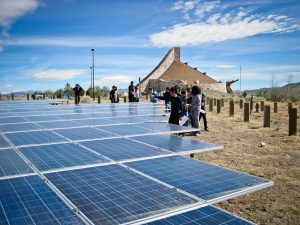
Students learn about solar panels and renewable energy in their community.
Celebrating Students’ Unique Culture and Experience
Place-based education honors local cultures, histories, and experiences, helping students see themselves reflected in the curriculum. Celebrating students’ local environment and lived experience highlights the many unique and diverse backgrounds that your students bring to the table. Students who feel represented in the classroom are more likely to be engaged and have better learning outcomes across subject areas.
Boosting Social Emotional Skills and Civic Engagement
Place-based learning encourages students to contribute to the greater good by starting local. In doing so, students learn to see themselves as integral members of a community. They develop a sense of belonging that fosters empathy and responsibility for caring for their neighbors. This local engagement lays the groundwork for wider civic engagement in the years ahead.

AP Environmental students planting a school garden.
Students who see themselves as part of larger community generally become more active citizens. According to the Center for Information and Research on Civic Learning and Engagement, educational experiences that emphasize place foster adults who are more likely to vote. And on a broader scale, place based approaches have been shown to create a sense of self-efficacy and control, making individuals feel like they can make a difference and that their participation in collection action matters. In a world where the challenges can sometimes feel overwhelming, this sense of empowerment that comes through place-based learning is invaluable for young people.
Does place-based learning actually improve student engagement? What are the real benefits?
The benefits of place-based learning are expansive – from classroom test scores to the well-being of individual students to community improvements that last long into the future. And to add to the positives, you don’t even have to overhaul your curriculum -integrating place-based education approaches can be easy. In our next blog, we’ll share simple strategies and projects for teaching with local context at any grade level. Stay tuned!
FAQ: The Benefits of Place-Based Learning for Student Engagement
Does place-based learning actually improve student engagement?
Yes. Place-based learning connects academic content to students’ real lives and local communities, which increases relevance and curiosity – two key drivers of student engagement and student motivation.
What are the real benefits of place-based learning?
The benefits of place-based learning include stronger student motivation, improved learning outcomes, real-world learning that builds real-world skills, a greater sense of belonging, growth in social-emotional skills, and stronger civic engagement that can positively impact the wider community.
How does place-based learning increase student motivation?
When students learn about issues that feel close to home, they’re naturally more interested and invested. Place-based learning ties topics to students’ lived experiences, which boosts curiosity and encourages deeper participation and effort.
What real-world skills do students gain through place-based learning?
Place-based learning helps students practice collaboration, communication, problem solving, and critical thinking through community-oriented teaching. Applying classroom concepts to real situations develops skills that matter for life beyond school.
How does place-based learning support a sense of belonging?
Place-based education honors local culture, history, and student experience, helping students see themselves reflected in the curriculum. When students feel represented, they are more likely to participate, stay engaged, and succeed.
Does place-based learning help with social-emotional skills and civic engagement?
Yes. Place-based learning encourages students to see themselves as meaningful members of a community, building empathy, responsibility, and confidence. Starting local can also strengthen civic identity over time by helping students believe their participation matters.
Image credit: Student filling in scantron (Image by F1 Digitals from Pixabay); Students planting garden (AP Environmental Science by St. George’s School is licensed under CC BY-SA 2.0); Solar panels (Black Rock Solar educational field trip at Pyramid Lake Museum and Visitor Center by Black Rock Solar is licensed under CC BY 2.0)