



This is the third blog in our series on invasive species in the United States and will focus on the Feral Swine. Previous invasive species posts focused on the spotted lantern fly and the kudzu vine.
Invasive Species Spotlight: Feral Swine
Feral swine may look like just another wild animal, but these invasive pigs are among the most destructive invasive species in the United States. Their explosive population growth, aggressive behavior, relentless appetite, adaptability, and intelligence have created environmental and economic challenges that span more than half the country. Today, the invasive species costs the U.S. billions of dollars each year.
What are Feral Swine?
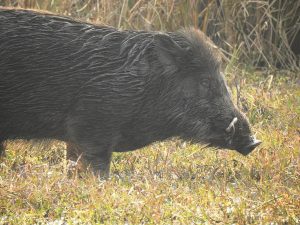
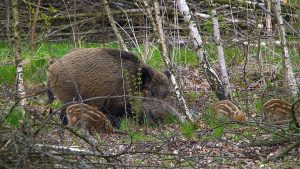
Feral swine are stocky, muscular animals with coarse hair and coloration that can range from black to brown, reddish, or even spotted. Piglets are easily recognized by the light longitudinal stripes along their bodies, a wild boar trait that provides camouflage but fades as they grow. Adult males (boars) are generally solitary and larger than females (sows) who are smaller and travel in family groups called sounders. Both sexes display a long, straight snout perfect for digging, tusks, and their tracks often resemble a deer’s but are wider and more rounded. The average adult wild hog can weigh between 80 and 440 pounds (approximately 36-200 kgs).
Where Did Feral Swine Come From?
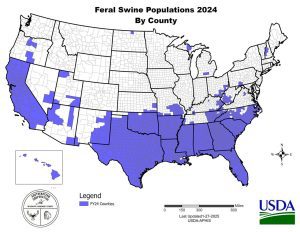
These pig-like creatures are not native to the United States – they are the result of multiple introductions over centuries. Domestic hogs were first brought to America in the 1500s by Spanish explorers as a food source, but many escaped or were released, gradually becoming feral. In the 1900s, Eurasian or Russian boars were imported for sport hunting and released into the wild. Over time, these two populations interbred, creating the hybrid feral swine seen today. Now, feral swine have been spotted in 41 states, and their adaptability, rapid reproduction, and aggressive behavior allow them to thrive in a wide range of habitats.
How Do Feral Swine Damage the Environment?
Feral swine are ecosystem bulldozers. Their behaviors include rooting, trampling, and wallowing, all of which cause extensive damage to natural landscapes. Their voracious diets include nearly everything: acorns, seeds, insects, invertebrates, birds and bird eggs, reptiles and amphibians, dead animals, garbage, grasses, fungi, and especially agricultural crops like corn, soybeans, wheat, potatoes, melons, leafy greens, and sugarcane. Essentially, anything that comes into their path is fair game during mealtimes.
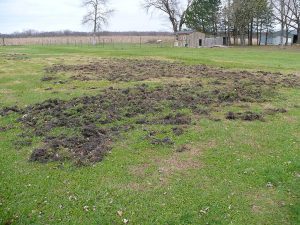
Common feral swine damage includes rooting, wallowing, and trampling of sensitive vegetation.
A sounder can easily root through, destroy, and eat acres of crops in a single evening, and a single wild pig can significantly disturb approximately 6.5 square feet in just one minute. Beyond croplands, they also tear up riverbanks and pollute waterways with their excrement, with fecal matter degrading water quality and aquatic habitats.
With an estimated population of roughly 9 million across the country, managing feral swine has become increasingly important. They are known carriers of at least 30 viral and bacterial diseases and nearly 40 parasites which can be transmitted to livestock and humans. They also compete with native species for food, habitat, and water, and their extensive rooting erodes soils and harms unique and sensitive ecosystems. Feral swine’s rambunctious behavior leaves a very distinguishable trail of destruction, and they further contribute to ecological disruption by spreading invasive plant species across the country.
The Economic Impact: How Much Does Damage from Feral Swine Cost?
The negative environmental and economic impacts caused by feral swine are most severe across the southern United States. Across the country, feral hogs cost an estimated $2.5 billion in annual agricultural losses. The following three states are hit the hardest and their hog infestations continue to worsen.
Texas
Feral swine infestations in Texas alone cost farmers an estimated $871 million in damage according to the Texas Farm Bureau. These losses result from crop losses, reseeding crops, degraded farmland or pastureland, and damage to infrastructure and equipment.
Louisiana
Not only do wild hogs destroy timber trees and crops, they also wreak havoc on waterways, levees, drains, and pastures. A study by the LSU Agriculture Center estimates that feral hogs cost Louisiana farmers $91 million annually.
Georgia
The Georgia Department of Natural Resources says wild swine are one of the most problematic species in the state. Farmers across the state experience annual losses estimated at $150 million per year due to the invasive species.
State-Level Action Against Feral Swine
 Studies have shown that at least 66 percent of the feral swine population must be removed each year to prevent it from growing. As a result, states have adopted multifaceted approaches in hopes of eradicating these invasive pests.
Lethal Removal: In states with severe infestations aerial gunning, trail cameras, remote sensing, ground shooting, tracking dogs, poisoning (where permitted), and night shooting are possible methods used to decrease wild pig populations. These methods are very effective but costly.
Monetary Assistance: The state of Alabama offers a feral swine exclusion fencing rebate program. The state of Georgia has a Hog Down Awards Program that allows residents the chance to win wild hog traps valued at approximately $3,500.
Individual Actions Against Feral Swine
Assisting with controlling feral swine populations ranges from beginner friendly tasks to operations better equipped for the experienced.
Report Sightings: The Squeal on Pigs app allows users to quickly and easily report sightings of feral swine.
Install Exclusion Fencing: Durable fencing that is both high and deep enough to exclude wild pigs is essential for keeping them out of certain areas like forested properties, farms, and livestock enclosures.
Set Traps: Wild boar traps are an easy way to capture entire sounders, but users have noted that the pigs’ intelligence has reduced the effectiveness of this method over time.
Recreational Hunting: Trophy or game hunting of feral swine is a popular approach in some states, but it is largely ineffective at controlling populations. Meat is often consumed, but caution should be taken as these animals typically carry a variety of diseases.
Stopping Feral Swine Populations
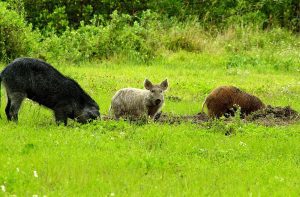
Feral swine pose a growing threat to ecosystems, agriculture, and public health, and their impact will only worsen without coordinated action. By understanding the scale of the problem and supporting management efforts at both the state and individual level, we can help protect native landscapes and reduce economic losses. With continued vigilance and responsible stewardship, communities across the country can work toward a future with fewer invasive hogs and a healthier natural environment.
Image credits: Feral swine close-up (Dr. Raju Kasambe, CC BY-SA 4.0, via Wikimedia Commons); Swine sightings in the US (Feral swine populations 2024 by county by U.S. Department of Agriculture’s Animal and Plant Health Inspection Service is Public domain); Destroyed field (U.S. Department of Agriculture, CC BY 2.0, via Wikimedia Commons); Feral swine family (Jerzy Strzelecki, CC BY-SA 3.0, via Wikimedia Commons); Three boars in grass (U.S. Department of Agriculture, CC BY 2.0, via Wikimedia Commons)