



Earlier this year we wrote several popular blogs on place-based education. But then the inevitable questions arose about how place-based learning fits with other educational approaches: Is place-based learning the same as outdoor education? What about project based learning? Can place-based education be layered with other approaches to enrich learning experiences? So here we’ll answer these questions and more.
This chart highlights six education approaches and what makes them unique. While all of these methods aim to make learning more engaging and meaningful, they differ in what drives the learning experience, where it happens, and the outcomes they prioritize. By looking at these approaches side by side, educators can better understand how each model supports different learning goals and choose strategies that best fit their students and context.
Place-Based Education vs Other Common Approaches
Approach |
What it is |
What drives it |
Where learning happens |
What it’s best for |
Example classroom activity |
| Place-Based Education | Immersive learning anchored in a local place and community context | Local environment + community issues + student inquiry | In the community, outdoors, and in-class (prep and reflection) | Building sense of place, civic connection, interdisciplinary learning | Students investigate stormwater runoff around the school and present solutions to the city or school administrators |
| Project-Based Learning (PBL) | Students complete a long-term project that answers a guiding question | A product, performance, or solution | Often classroom-based (can include community) | Deep learning + collaboration + building a final product | Students design a museum exhibit on ecosystems (could be local, but doesn’t have to be) |
| Experiential Learning | Learning through direct experience + reflection | Doing + reflecting | Anywhere (lab, classroom, outdoors, workplace) | Engagement and skill-building through experience | Students run a simulation, then reflect on decisions and outcomes |
| Outdoor Education | Learning that happens outdoors (often nature-focused) | Outdoor setting + physical experience | Outdoors | Nature connection, physical learning, team-building | A nature hike with journaling and species observation |
| Service Learning | Community service tied to academic learning goals | Serving a community need | Community-based | Civic responsibility + real-world impact | Students organize a food drive and analyze local food insecurity data |
| Field Trips | A short visit to a site related to course content | Exposure to a place or expert | Off campus | Enrichment and context | A state park visit with a worksheet (valuable, but usually not led by student inquiry ) |
Start Using Place-Based Education Today
We hope this gave you some meaningful food for thought on the many ways of engaging young people in the classroom with place-based learning and beyond. And remember, these approaches aren’t all or nothing strategies: layer them, tailor them for your required standards, use them for team-teaching, or simply add a one-off lesson into your plans. Have fun!
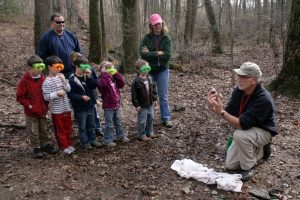
Image credit: Outdoor Ed demonstration (Field Trip: First Grade Outdoor Education by woodleywonderworks is licensed under CC BY 2.0)
About Population Education
Population Education provides K-12 teachers with innovative, hands-on lesson plans and professional development to teach about human population growth and its effects on the environment and human well-being. PopEd is a program of Population Connection. Learn More About PopEd.