



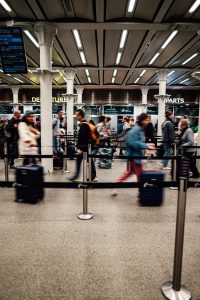
 Why do people move? Sometimes people move for job opportunities or move off to college. Some simply decide that they want to be closer to family. Other times the need to move is more pressing, for instance, needing to find a safer place to live or to escape conflict. Environmental and economic changes can also make leaving a necessary choice.
Migration comes in many forms. People might relocate within their own country, which is known as internal migration, or some may migrate internationally. They might choose to move (voluntary migration) or be forced to leave (forced migration). So, what are the different types of migration, and how does migration reshape communities?
What Is Migration?
Migration is the movement of people from one place to another, either within the same country or across international borders, to live temporarily or permanently in a new location.
People migrate for many reasons, including employment opportunities, education, family reunification, environmental changes, or the need to escape conflict and unsafe living conditions.
Migration can take different forms depending on where people move and how much choice they have in the decision. For example, moving from a rural town to a city is a form of internal migration, while relocating to another country is international migration. Migration can also be voluntary, when people choose to relocate, or forced, when circumstances make leaving necessary.
Along with births and deaths, migration is one of the three main components of population change. It influences where people live, how communities grow or shrink, and the demographic characteristics of populations around the world.
What Causes People to Migrate?
Migration is influenced by a combination of economic, environmental, political, and social factors. Some conditions encourage people to leave their homes, while others attract them to new destinations. These are commonly described as push and pull factors.
For example, unemployment, conflict, and environmental degradation may push people to leave, while employment opportunities, safety, and access to education may pull them toward another location.
Migration can also be categorized by its underlying cause, including labor migration, forced displacement, and environmental migration. These categories sometimes overlap with the broader classifications of internal, international, voluntary, and forced migration.
For a closer look at the specific reasons people relocate, explore our article, Why Do People Migrate? The 4 Most Common Types of Migration.
What Is Internal Migration vs International Migration?
A good way to differentiate the types of migration is to first think about where people go:
- Internal migration happens when people move within the same country. Someone might leave a rural area for a city, relocate to another state or region, or move from one city to another.
- International migration happens when people cross a border to live in another country.
For a deeper understanding, consider the reasons why people move and how much choice they have in the decision. That distinction defines the concepts of voluntary and forced migration.
What Is Voluntary Migration?
Voluntary migration happens when people decide to move, rather than being forced to flee an immediate threat.
When we talk about voluntary migration, employment is one of the biggest drivers. People move to find jobs and earn higher wages. Often there are career opportunities in other areas that they can’t find at home. The latest data from 2022 shows there are 167.7 million international migrant workers globally.

Ho Thi Thuy (front), a 29-year-old migrant worker from Ha Tinh, Vietnam, works at a farm in Cameron Highlands, Malaysia.
But jobs are only part of the picture. Individuals also migrate for educational opportunities, family, to improve their living conditions, or for a change in lifestyle.
Voluntary migration can happen within a country or across international borders. These categories are not mutually exclusive. A person can be both an international migrant and a voluntary migrant.
What Is Forced, or Involuntary, Migration?
Forced migration, also referred to as involuntary migration, occurs when remaining in one’s home is unsafe or unviable.
Throughout history, millions of people have been forced to migrate due to wars, persecution, human rights violations, and natural disasters. According to the UN Refugee Agency (UNHCR), an estimated 117.8 million people globally were forcibly displaced at the end of 2025. That includes refugees, asylum-seekers, internally displaced people, and others in need of international protection.
Forced migration doesn’t always mean crossing a border. People who are forced from their homes but stay within their own country are called internally displaced persons (IDPs). At the end of 2025, about 68.7 million people were internally displaced by conflict and violence.
Refugees: A Forced Migrant
A refugee, on the other hand, is someone who has been forced to leave their country and cross an international border, and returning home would put them in danger. The difference matters. We hear most frequently about refugees, but most people displaced by conflict move within their own countries. At the end of 2025, IDPs made up 58 percent of the world’s forcibly displaced population.
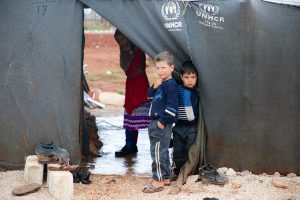
The situation in Ukraine is a current example of forced migration. Millions have been forced to leave their homes because of the war following Russia’s invasion. Some individuals relocated to safer areas within Ukraine, becoming internally displaced people. Other Ukrainians crossed international borders, which qualifies them as refugees.
Is Migration Always Voluntary or Forced?
Not necessarily. The terms “voluntary” and “forced” are useful for understanding overall migration patterns, but in reality, decisions about moving can fall into a grey area.
Think of a farming family that has been struggling to stay afloat due to frequent droughts and smaller crop yields. No government authority is ordering the family to leave. But deteriorating environmental and economic conditions make staying increasingly difficult. This type of climate migrant is on the rise and the World Bank projects that as many as 216 million people could migrate within their own countries by 2050 because of environmental pressures.
Similarly, a migrant worker may seemingly choose to move for better employment, but that decision is based on current unemployment/underemployment, poverty, or food insecurity in their home region.
Migration decisions are shaped by several factors called drivers of migration: the conditions and circumstances that influence why people move. One way to look at it is to consider: How much choice does a person actually have?
How Does Forced Migration Affect Countries That Receive Migrants?
When large numbers of migrants arrive in a new country, both the migrants and their host communities are affected.
In the short term, the need for more housing, food, health care, schools, transportation, and other services may increase. An influx of migrants into an area can alter its population size, workforce, and even redefine school districts.
Meeting the Needs of Refugees
Refugees have added challenges, as they often leave their homes with little warning. Many arrive with little or no money. They likely do not have any contacts nor speak the local language. Some may be recovering from violence or loss. In this case, their host communities may need to provide alternate services such as language classes, mental health care, and legal support.
Consequently, the effects of forced migration vary by location. Getting the full picture requires looking at both the challenges and the contributions associated with refugees and the communities that welcome them.
Migrants, including refugees, ultimately contribute to their new communities, becoming woven in as workers, students, customers, business owners, taxpayers, neighbors, and friends.
Migration and Population Change
Migration is one of the three primary drivers of population change, along with births and deaths. When people move, they change the communities they leave as well as the communities they join.
Exploring the different types of migration helps us see how jobs, conflict, environmental changes, population trends, and personal choices are all interconnected.
Image credits: People traveling (Photo by Wonder KIM on Unsplash); Migrant workers (The roads travelled for work – Women Migrant Workers in Singapore and Malaysia by UN Women is licensed under CC BY-NC-ND 2.0); Syrian children in UNHCR tent (Photo by Salah Darwish on Unsplash)
Frequently Asked Questions About Migration
What are some examples of migration?
Examples of migration include a student moving to another city for college, a worker relocating abroad for employment, a family moving from a rural community to an urban area, or refugees fleeing armed conflict. These examples illustrate how migration can occur within countries or across borders and under different circumstances.
How does migration affect population growth?
Migration changes the population size of the places people leave and the places they move to. When more people arrive in an area than leave, positive net migration contributes to population growth. When more people leave than arrive, negative net migration contributes to population decline. Migration also influences population age structures, workforce composition, and the demand for housing and public services.
How does migration affect the population of rural and urban areas?
Rural-to-urban migration can contribute to urban population growth as people relocate to cities for employment, education, and services. At the same time, rural communities may experience population decline or an aging population if younger residents move away. However, migration can also occur in the opposite direction when people seek affordable housing, remote work opportunities, or a different lifestyle.
Can migration be both voluntary and forced?
Migration decisions can fall somewhere between voluntary and forced. For example, a family experiencing repeated droughts and declining agricultural income may technically choose to relocate, but their economic and environmental circumstances leave them with few realistic alternatives. This illustrates why migration is often better understood as a spectrum of choice rather than two completely separate categories.