



Every year, millions of tons of textiles leave our closets, raising an important question: Where do our unwanted clothes go once they leave our closets? Understanding what happens after we toss or donate clothing reveals another side of our consumption habits and why managing textile waste is becoming an increasingly important sustainability challenge.
In our previous blog, What Our Clothing Habits Reveal About Consumption, we explored how fast fashion and changing shopping habits have transformed the way we buy, wear, and discard clothing. Our clothing’s journey reveals that textile waste isn’t just about personal choices. It’s also shaped by the systems that produce, collect, and dispose of clothing.

The Scope of the Problem Extends Beyond Individual Consumption
Often, we hear about sustainability as an individual responsibility. We are told to carry a reusable bag, buy less stuff, and recycle more. And while these things matter, we cannot ignore that the real path to large-scale sustainability is bigger than any one person’s shopping habits.
The average American woman today owns around 30 outfits. That’s an outfit for nearly every day of the month. In 1930, that number was nine, according to Forbes. And by some estimates, as much as 80% of what Americans own goes unused, according to the National Association of Professional Organizers. We are undeniably a culture of overconsumption built over decades by systems, marketing, and policies that made buying easy and pushed consequences to the back of our minds.
There is an opportunity to redesign these systems for a more sustainable future. The challenge has three layers, and all three are beginning to shift:
-
- Individual purchasing decisions
- Corporate production and sales choices, including transparency in reporting environmental impact
- Governmental regulations and accountability systems
Alignment among individual, corporate, and governmental actions is the key to meaningful change. Currently, these groups often work separately. But more experts and policymakers are beginning to work together to solve shared challenges.
Where Does Your Old Stuff Actually Go?
According to the National Institute of Standards and Technology’s report, Facilitating a Circular Economy for Textiles, only about 15% of discarded clothing and textiles in the United States are collected for reuse, recycling, or downcycling, while the remaining 85% end up in landfills or are incinerated. These figures highlight the need for better systems to collect, repair, reuse, and recycle textiles so fewer valuable materials go to waste.
What Really Happens When Clothing Gets Donated?
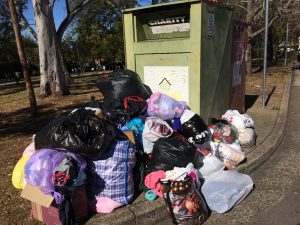
While for many of us dropping off our unwanted items at places like Goodwill has become commonplace, donating clothing is more complex than it appears. Only about 20% of donations to thrift shops actually get sold in retail locations. The rest is exported to lower-income countries, sent to secondary processors, or landfilled, particularly when items are low-quality or damaged and are discarded during initial sorting.
This is the uncomfortable truth behind the “just donate it” solution. The donation pipeline was never designed to handle the sheer volume of clothing fast fashion produces, and right now it’s overwhelmed.
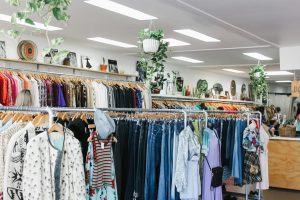
But there is good news: thrifting is in! Purchasing and wearing secondhand clothing instead of new items reduces carbon emissions by an average of 25% (Green Story Inc., 2022). The growth of platforms like ThredUp, Depop, and Poshmark, driven primarily by Gen Z and Millennial shoppers, shows that secondhand shopping is increasingly a preferred option. The infrastructure isn’t where it needs to be yet, but the demand for better is clearly there and rapidly growing.
Where Current Solutions Fall Short
Some solutions, like local recycling programs or “green” product labels, can make a difference. But they often aren’t connected to other efforts. Sustainability goals intersect with economic, social, and political factors in complex ways that cannot be addressed by siloed interventions.
What are the main obstacles standing in the way of sustainable clothing?
1. Greenwashing
Almost all current sustainability solutions focus on the point of purchase, highlighting eco-friendly packaging and “green” materials. But the environmental impact of a product doesn’t end when you swipe your card to buy. It continues through years of use and continues into the products’ disposal. Ignoring the product’s full life means we’re not addressing the entire issue.
Some “green” marketing strategies have been criticized for using guilt-based messaging rather than helping consumers make informed choices. Some companies claim their products are “eco-friendly” without providing evidence to support those claims. This is called greenwashing. To ensure companies maintain honesty, organizations and governments need to verify pro-environmental claims on clothing. This is a genuine challenge, but growing consumer pressure for transparency, particularly from younger buyers, and recent regulatory moves suggest the tide is starting to turn.
Examples of greenwashing
A great example of this is when companies promote carbon-neutral shipping but don’t explain what a carbon offset is or how it works. Another example is the energy-saving settings on your phone, computer, or TV. You know you will use less electricity, but how does this help the planet? These tactics can lead to consumer fatigue rather than create lasting change. Good sustainability tools need to inform and empower, not make people feel pressure.
2. Sustainability Can Be Expensive
As with so many things, obstacles often arise simply because of cost. Sustainable products often have higher prices. When they are too expensive for some families, it can widen the gap between people who can afford environmentally-friendly options and those who can’t. Buying secondhand clothing is a great way to save money and reduce waste. Experts are working on ways to make sustainable fashion more affordable and accessible for everyone.
3. There Needs to be Real Government and Business Support
Individual action matters, but it isn’t enough to solve our textile waste problem. The current infrastructure is already handling too many clothes. To recycle more textiles, communities need better recycling centers, clothing take-back programs, and improved sorting technology. Building these systems takes support from both governments and businesses.
France recently passed a first-of-its-kind law that penalizes ultra-fast fashion retailers like Shein, Temu, and AliExpress for selling clothing essentially designed to be thrown away. A mandatory environmental fee between €0.25 and €6 per product will be charged on every low-sustainable item sold in France. By 2030, that fee could rise to up to €20. The idea is to make disposable products less profitable. If a €3 T-shirt automatically comes with a €6 environmental fee, companies will be deterred from producing cheap quality items. Notably, an advertising ban was also put into place which even applies influencer promotions on social media.
Technology is also playing a role in tackling our waste problem. In particular, we are seeing an uptick in apps that track what we buy and throw away. These tools can help people make more sustainable choices, but they also collect sensitive personal data. As artificial intelligence continues to advance, strong privacy protections will be needed to make sure this information is used responsibly.
Gen Z Shopping Habits: The Next Generation Is Leading the Charge in Sustainable Consumption
When discussing sustainable consumption, Gen Z shopping habits deserve a second look because they are reshaping consumer norms. Sustainability is proving to be a genuine deciding factor in how members of Gen Z spend. According to a GlobalData Consumer Resale Survey, 47% of Gen Z refuse to buy from non-sustainable apparel brands and retailers, an increase of 11 points since 2021 alone. That’s not a passing trend; it’s a substantive shift in purchasing behavior.
Per thredUP’s 2023 Resale Report, 63% of Gen Z believe they can meaningfully reduce their individual carbon footprint. Additionally, Deloitte’s 2024 Gen Z and Millennial Survey shows that roughly a quarter of Gen Z (25%) and Millennials (24%) have dialed back their buying from businesses due to unsustainable supply chain practices.
Secondhand shopping, in particular, has become second nature for this generation. Savers’ 2024 Thrift Industry Report found that nearly 60% of Gen Z say more than a quarter of their wardrobe is secondhand, compared to fewer than 4 in 10 consumers overall—over 40% identify as thrifters, and 60% of those thrifters shop secondhand at least monthly. For a generation raised in a world of climate anxiety and the implications of fast fashion, buying used is becoming their preferred choice.
Conclusion: The Issue is Complex, But Genuine Progress is Underway
Most American homes are now packed with belongings on a scale that would have seemed unthinkable a generation ago, and 85% of discarded clothing ends up in landfills. Even donated clothes rarely get the second life we assume they will. None of this is easy to hear, but awareness is the first step toward doing something about it.
The secondhand market is booming, researchers are creating solutions that make sustainable choices simpler and more accessible , and governments in multiple countries are starting to mandate real accountability.
There is still a substantial gap between our current practices and where we need to be, but progress is accelerating in the right direction. As individuals, we need to stay informed, make better choices when possible, and continue to advocate for higher standards from the businesses and governments that shape the options available to us.
What Can We Do Right Now?
No one person or group can solve this problem alone. Research shows that everyone has a role to play. When purchasing clothes:
-
- Shop secondhand first. Buying used instead of new cuts carbon emissions by an average of 25%.
- Ask “where does this end up?” before buying. If you can’t answer that question, it’s worth taking a few minutes to find out.
- Choose brands that publish real environmental data, not just vague “eco-friendly” claims.
Image credits: Market (Xavi Cabrera on Unsplash); Piled clothes outside charity bin (dumping at charity clothing bins by Anna Gregory is licensed under CC BY 2.0); Thrift store (Photo by Prudence Earl on Unsplash)
FAQs
What are sustainable alternatives to disposing of old clothes?
The most sustainable option is to extend the life of clothing, not just redirect it. Here are ways to do it:
-
- Wear longer & repair – the most sustainable product is often the one you already own. Mend tears, replace buttons, tailor for better fit, etc.
- Repurpose – turn old clothes into cleaning rags, tote bags, or patchwork items
- Swap or share – clothing swaps with friends or community events
- Resell – secondhand platforms (Depop, Vinted, Poshmark) keep items in use
- Donate thoughtfully – only give items in good condition to places that actually need them
Are there eco-friendly ways to donate or recycle clothes?
Yes, but they vary in impact.
Donating (best for wearable items):
-
- Local shelters, mutual aid groups, refugee support organizations
- Schools, community closets, or crisis centers
- Smaller charities often ensure items are directly used
Recycling (for damaged items):
-
- Textile recycling programs (some brands and municipalities offer drop-offs)
- Specialized recyclers that turn fibers into insulation, stuffing, or industrial materials
Important reality: only a small percentage of donated clothing is resold locally – a lot is exported or discarded. So quality and intention matter.
What should I do with old or unwanted clothes?
Think in terms of a simple hierarchy:
-
- Keep & use – restyle, layer, or rediscover pieces
- Repair or alter – small fixes can make something wearable again
- Resell or swap – extend life within your community or online
- Donate responsibly – only clean, usable items
- Recycle textiles – for items that are too worn out
And the bigger takeaway: If your closet is overflowing, the most impactful step isn’t just clearing it – it’s buying less, choosing better, and wearing longer.
How does advertising influence shopping habits?
Advertising strongly influences our shopping habits by encouraging us to buy products we may not actually need. Through eye-catching images, emotional messaging, and targeted ads, companies create a sense of desire and urgency around their products. Advertising can also make certain trends and lifestyles seem essential, leading people to shop more frequently and replace items sooner. As a result, constant exposure to advertising can contribute to overconsumption and increase the environmental impact of our shopping habits.