


Localized learning, pedagogy of place, community-based projects… whether you’re a formal classroom teacher or a non-formal educator, you’ve likely heard these phrases. They are all strategies that can be used to describe place-based learning, an educational approach that roots learning in students’ local community, environment, and culture.
Place-based learning was officially coined in the 1990s and has been gaining steam in the education world ever since. It’s not hard to see why. With a focus on community connections, place-based education grounds big ideas in students’ own backyards, making classroom concepts more meaningful and relevant. Educators who use place-based pedagogy report increased motivation and deeper understanding among students, and studies show that it improves learning outcomes for all grade levels and across all subject areas.
How Can Place-Based Learning Theory Apply to Classrooms Today?
With increased pressure to teach to the test and more rigidity in curriculum requirements, you may be wondering exactly how to implement place-based education in your classroom. This winter, we want to help make it easy to integrate this effective and important strategy. We’ll be explaining exactly what place-based education is and giving you easy-to-use lessons and projects that will fit seamlessly into your already full classroom planner.
Lots of Resources for Place-Based Learning
Whether you already use place-based strategies regularly or you’re just trying to figure it out, you’ll want to follow along with us on Facebook, LinkedIn and Bluesky as we illuminate all things place-based education. Here’s what’s in store across PopEd’s channels in the coming weeks:
Blogs – We’ll post a series of blogs that investigate topics like the “what are the real benefits of place-based education?” and “what are some simple ways to incorporate place-based education into my classroom”? You won’t want to miss these practical, teacher-friendly explainers to help you feel more confident and inspired to start place-based teaching.
Free online professional development – Want to see some place-based lessons in action? Join us for a free place-based education webinar on Wednesday February 25th from 4:30-5:45 pm ET. Educators will participate in a series of Population Ed lessons that help students investigate their own community and environment – empowering them to address local issues while learning about global challenges.
Resources – We will be regularly posting resources that put place-based learning materials right at your fingertips. For example, this article from National Geographic gives concrete steps, including specific inquiry questions, for launching a place-based learning lesson. And this resource bank is full of creative ideas like sending a postcard from your past community or finding shapes in the local park.
Global Studies and Place-Based Education Go Hand in Hand
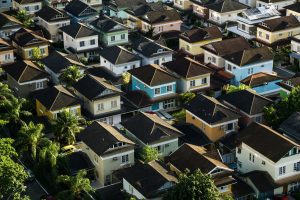 It may seem counterintuitive to cover global topics by focusing in your own neighborhood. But in fact, investigating “big” topics like resources use, deforestation, or inequity on a local level can make them easier to grasp. When students discover how issues impact their own community, they gain a solid foundation that allows them to better understand complex connections in the wider world.
For example, learning how the their neighborhood has changed over the years can provide insights into trends in the larger U.S. population. Or investigating pollution sources in a local waterway can provide a basis for understanding pollutants that impact in the world’s ocean. In this way, seemingly mundane or abstract concepts can be brought to life across subject areas.
Students who participate in community-based learning are also more likely to see themselves as agents of change. When they learn how to engage with local issues to make a positive impact, they gain confidence in advocating for change on larger scales. These students are more likely to be civically engaged and to take ownership and responsibility for making the world a better place, both near and far.
We can’t wait to put the best place-based teaching resources at your fingertips this winter!
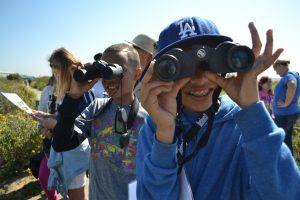
Image credits: Children with Binoculars (Children peer through binoculars at San Diego Bay Refuge by Lisa Cox/USFWS is Public domain); Aerial view of neighborhood (Photo by Breno Assis on Unsplash)