



Many teachers have reached out to Population Education asking: What does place-based education mean? Can you describe it in simple terms? We have heard you! In this blog, we will introduce place-based education and explore the elements that separate it from other popular educational techniques.
What is Place-Based Education?
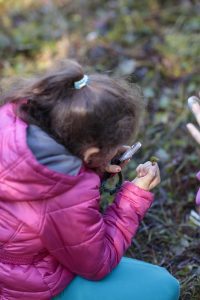 Also known as localized learning and pedagogy of place, place-based education is an interactive learning style that encourages students to develop deeper environmental and social connections with their local communities.
Place-based education can be used for K-12 and college students and is rooted in building students’ sense of place. This type of community-based learning was first coined in the 1990s but has regained traction since the COVID-19 pandemic. During the pandemic, many schools went fully or partially online and outdoor settings became the perfect classrooms to continue teaching while meeting social distancing requirements.
Where Does Place-Based Learning Happen?
Place-based education can occur in different types of locations and naturally promotes inquiry-based, experiential learning (see definition in table). Community sites could include local businesses or field sites like a local park or wildlife refuge. Once a location is chosen, students are encouraged to take charge of their learning – a sure way to spark curiosity! They make observations at a given site, ask questions, and follow their interests. While students dive into a research topic, teachers take a step back and serve as facilitators, helping students build strong relationships with their community members and a deeper understanding of their surroundings.
Common Ways to Implement Place-Based Education
Place-based education has continued to be shaped by other teaching strategies and philosophies since the pedagogy was formed. Now we will look into four ways you can try place-based based teaching with your students, and give you examples for each.
1. Links to Classroom Learning: Easy Ways to Introduce Place-Based Learning Without Redesigning Your Curriculum
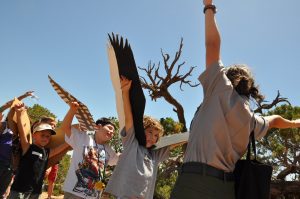 Even though community-based learning is often associated with outdoor education or going beyond the classroom walls, it also establishes important skills while still indoors. For example, students may practice using maps of their local area before going into the field or may analyze data on their chosen topic before working in the community. Establishing academic skills while inside will motivate students when they head outside into the community.
2. Deconstructing History with Place-Based Education
Localized learning provides a great opportunity for students to delve more into the specific history of their local community. Students can be encouraged to break down or deconstruct oppressive relationships that still exist in their own backyard, helping them to understand broader social issues that show up in their textbooks. For example, place-based education may ask students to analyze how prominent concepts like white supremacy and settler colonialism are still embedded in local society. Students can then learn about new concepts that promote justice and connection to the natural world that are beginning to shape their local communities today.
3. Citizen Science: Using the Local Environment to Teach Science Concepts
Place-based learning and citizen science, which involves the use of basic protocols to collect scientific data on a larger scale, are often tied together to give students hands-on experiences. This includes projects like iNaturalist, a mobile app that allows users to upload photos of flora and fauna they spot in their local area, and Monarch Watch, which lets users submit monarch tagging data. Citizen involvement in these projects is important because volunteers fill critical data gaps in areas that scientists cannot reach on their own. They are also an easy way to include localized learning, grounding science concepts in concrete data found right near students’ homes. 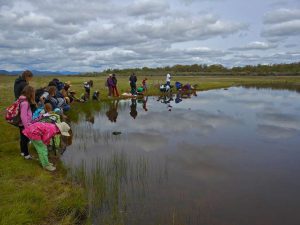
4. How Learning with a Local Context Improves Students’ Civic Awareness
Teachers can encourage students to develop stronger ties with their local community members by having them join local events and activities. These can include attending city hall meetings or neighborhood clean-ups. In addition, teachers and the community can collaborate to develop projects where students work to solve an issue that is present in their local area. They may need to conduct research, collect data, or hold interviews with community stakeholders. This is known as problem-based learning, or a group project where students are given a real problem and must use critical thinking skills to find the best solution. This type of learning not only motivates students but can also lead to an improvement in broader community wellbeing.
Through place-based learning, communities and schools remove the barrier between them, creating a self-sustaining program that benefits all members involved.
Benefits of Place-Based Learning
What separates place-based education from other education approaches is its versatility and the ability for students to take the lead. Place-based education can be tailored to meet the needs of students and the community, all while achieving teaching standards.
In our next blog, we’ll discover the many benefits of place-based education for students and teachers. In the meantime, explore our related blogs on place-based teaching and place-based geography ideas, and be sure to register for our free teacher training webinar: Place-Based Learning Lessons: Connecting Local Exploration to Meaningful Learning.
Place-Based Education FAQs
What is place-based education?
Place-based education uses the local community and environment as the context for learning through student inquiry and real-world connections.
Where does place-based learning happen?
In the classroom, on school grounds, and at community sites like parks, local businesses, museums, or neighborhoods.
Is place-based education the same as outdoor education?
No. Outdoor education is defined by being outside; place-based education is defined by learning rooted in a local place (indoors or outdoors).
Do I need to redesign my curriculum to try it?
Not at all. Start small with resources accessible to you like local maps, data, history, or a short local observation activity connected to your existing standards.
What are easy examples to try place-based teaching right away?
Schoolyard observations, local history investigations, citizen science data collection, or a community-based question students research and present.
Image credits: Student outdoors with magnifying glass (Student with a Magnifying Glass by Shenandoah National Park is public domain); Students learning about raptors (Colorado NM Junior Ranger Camp Raptor Week by National Park Service is licensed under CC BY 2.0); Marsh field trip (Bureau of Land Management Oregon and Washington from Portland, America, Public domain, via Wikimedia Commons)