



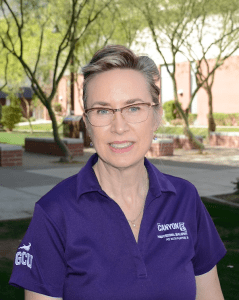
 We are happy to announce Population Education’s Most Valuable Trainer of 2025: Marni Landry! Marni is an Adjunct Professor at Grand Canyon University and the Sr. Director of K12 STEM Outreach at Grand Canyon Education in Arizona.
Contributions to PopEd
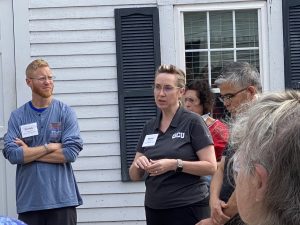
Marni joined the PopEd Trainers Network in 2022. Since then, she’s presented nearly two dozen workshops and shared PopEd resources with almost 500 educators. She’s a regular at our online teacher training workshops and was a driving force behind recent updates to one of our most popular lessons, Mining for Chocolate. Because of her significant contributions to our organization, we’re pleased to name Marni PopEd’s MVT of 2025. Thank you, Marni, for all of your invaluable support!
Let’s Hear From the MVT
I recently had the opportunity to connect with Marni and learn more about her passion for PopEd. Here is what she shared with me:
What motivated you to become a PopEd trainer?
ML: I first learned about PopEd at a conference presentation more than 15 years ago. I incorporated PopEd into my biology classes and noticed how the lessons effortlessly integrated math and social science. My students were engaged during the lessons, participated in thoughtful discussions after each activity, and easily met the learning objectives of each lesson. How could I not want to share this great resource with other educators?!
What is your favorite PopEd lesson plan?
ML: With Teachers:
Pop Circle: This lesson plan applies to every grade level and physically demonstrates the concept of exponential growth. It gets everyone involved, leading to engaging discussions at the beginning of each PD session. It also serves as an ideal scaffold that I refer to as we progress through other lessons.
One For All: Pandemonium For All! There’s always a teacher who takes on the role of the prize seeker and collects all the ‘chips’ for several rounds. This lesson plan is a great way to incorporate math.
With Students:
Population Pyramids: Students can visually observe the differences in population structures, which fosters excellent Science & Engineering Practice cause-and-effect discussions, especially in social science contexts.
Timber: Students often struggle to predict the outcome and are surprised when the forest runs out. I appreciate how they physically connect consumption, renewable resources, and math.
What is your most memorable experience or presentation as a PopEd trainer?
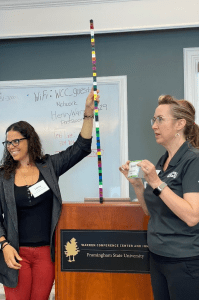
ML: That one time it was a LARGE group and two of my three activities required attaching posters/artifacts to the wall, but the conference center had carpeted walls, so nothing stuck, and no one could see.
Any specific tips or ideas on using Pop Ed materials or presenting Pop Ed workshops?
ML: Popsicle sticks are an excellent and inexpensive alternative for many of the props in activities like One for All, Timber, and Panther Hunt.
Pony beads are a great alternative to water in the Stork and the Grim Reaper activity and can also be used as props for other activities.
My unofficial activity that I start and end every session with involves asking participants to write down their predictions for the current world population to the nearest whole number without cheating (looking it up). Once everyone has committed to a written prediction, I show them the Pop Clock and give a small prize to the person who was the closest. Afterward, I encourage participants to think like their students and encourage them to share some “I Notice” and “I Wonder” thoughts. I don’t answer any of the wonders or questions but rather use the Noticings/Wonderings they share throughout the session to tie it back to that phenomenon. Finally, I tell them that we will have another competition at the end of the session and give them a moment to strategize how they will make that prediction. Before the ending survey, I ask them to predict the current population again.
Congrats MVT!
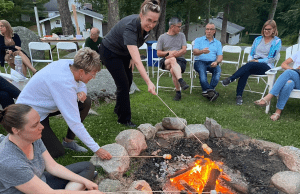
We are so grateful, Marni, for the time and effort you’ve spent supporting our program and sharing resources with educators in Arizona. Congrats on being the 2025 MVT, and thank you!